

Kyrgyzstan: Kempir-Abad Acquittals Confirm Political Prosecution Amid UN Findings of Arbitrary Detention
Vienna / Bishkek
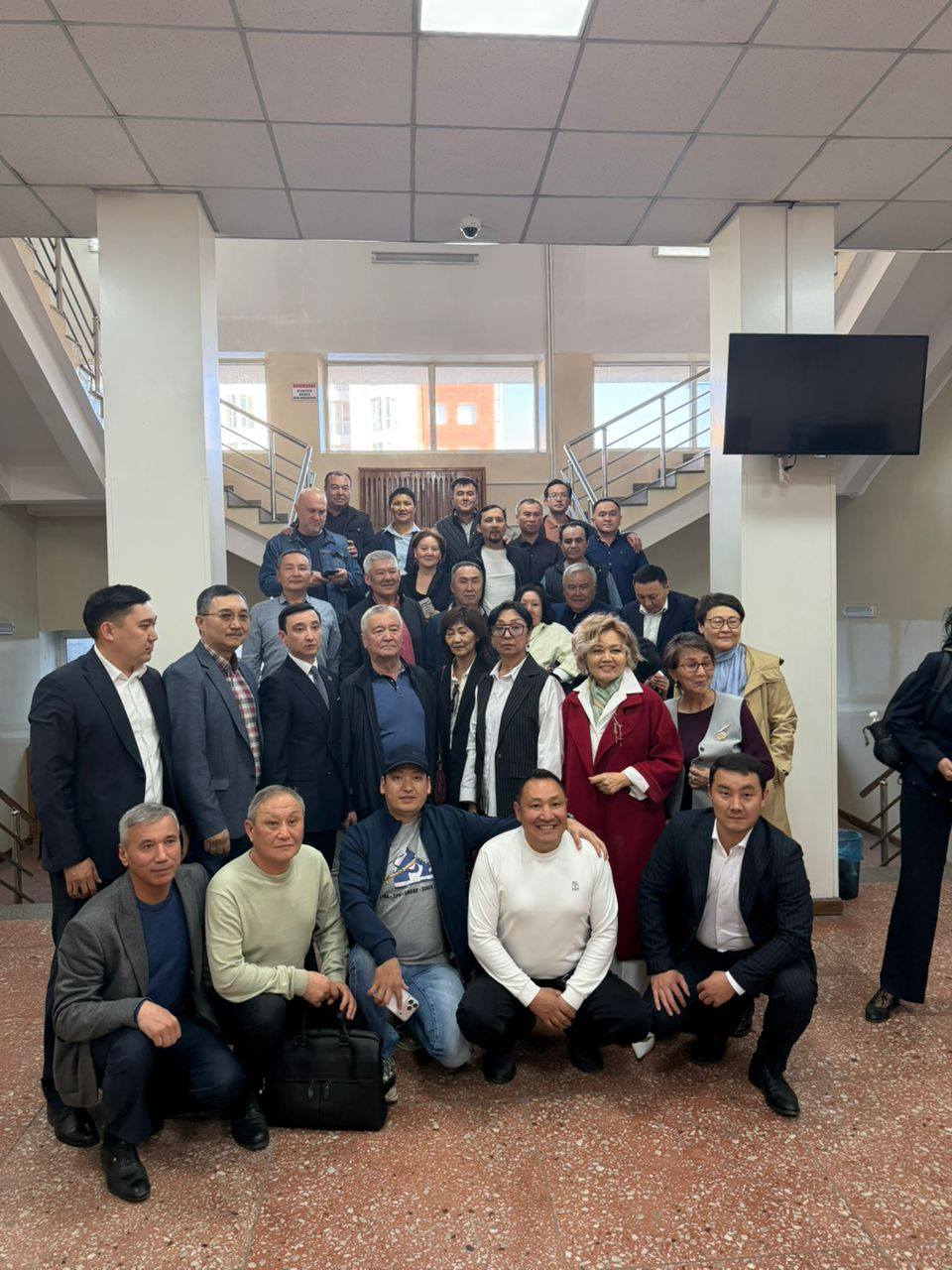
Freedom for Eurasia (FFE) welcomes the decision of the Bishkek City Court to uphold the acquittal of 22 activists, politicians, and journalists in the Kempir-Abad case. This ruling confirms what international human rights mechanisms and civil society have consistently stated: the case was politically motivated, legally unfounded, and aimed at suppressing legitimate civic engagement.
The defendants — including Azimbek Beknazarov, Ravshan Jeenbekov, Rita Karasartova, Klara Sooronkulova, and others — were detained in October 2022 after publicly opposing the government’s border agreement with Uzbekistan concerning the Kempir-Abad reservoir. They faced serious charges, including organizing mass unrest and attempting to seize power, despite the absence of credible evidence.
Critically, in Opinion No. 61/2025, adopted at its 104th session (10–14 November 2025), the UN Working Group on Arbitrary Detention concluded that the detention of Klara Sooronkulova, Rita Karasartova, Gulnara Dzhurabayeva, Asya Sasykbayeva, and Perizat Suranova was arbitrary under international law, falling within Categories I, II, and III. The Working Group found that:
- The women were detained without any legal basis, particularly after their acquittal in June 2024;
- Their prosecution stemmed directly from the peaceful exercise of their rights to freedom of expression, assembly, and association;
- Their right to a fair trial was violated through closed proceedings, denial of access to case materials, and prolonged pre-trial detention (approximately 19 months).
The Working Group further emphasized that continued restrictions after acquittal — including house arrest — constitute a “flagrant violation” of international law, as any legal basis for detention ceases once a court determines that no crime has occurred.
FFE underscores that these findings are not abstract legal conclusions but authoritative determinations under international human rights law, including violations of Articles 3, 9, 19, and 20 of the Universal Declaration of Human Rights and Articles 9, 14, 19, and 21 of the International Covenant on Civil and Political Rights, to which Kyrgyzstan is a party.
The case also reveals a deeply troubling pattern of “revolving door” or retaliatory prosecutions, highlighted by the re-arrest of Rita Karasartova in April 2025 for sharing a letter on social media — conduct clearly protected under international law. The UN experts found that recycling similar charges following acquittal demonstrates the absence of a genuine legal basis and reflects ongoing judicial harassment.
While the appellate court’s decision to uphold the acquittals is an important step, it does not remedy the extensive harm caused. The defendants endured prolonged detention, reputational damage, restrictions on their liberty, and years of legal uncertainty. Nor does it address the structural misuse of criminal law to silence dissent.
The Kempir-Abad case must be understood within the broader deterioration of civic space in Kyrgyzstan. Once regarded as the most politically pluralistic country in Central Asia, Kyrgyzstan has witnessed increasing pressure on independent media, civil society, and political critics. The use of vague and overbroad criminal provisions — such as those related to “mass unrest” and “seizure of power” — continues to enable the criminalization of peaceful civic activity.
Freedom for Eurasia calls on the authorities of Kyrgyzstan to:
- Fully implement Opinion No. 61/2025 of the UN Working Group on Arbitrary Detention;
- Immediately lift all remaining restrictions on the acquitted individuals;
- Provide effective remedies and compensation for the violations suffered;
- Conduct an independent investigation into the arbitrary detention and prosecution of the defendants;
- Ensure accountability for officials responsible for politically motivated prosecutions;
- Reform legislation and practice to prevent the misuse of criminal law against peaceful civic actors.
“The UN decision confirms what civil society has said from the very beginning: these prosecutions were not about security or public order, but about silencing dissent and controlling public debate,” said Freedom for Eurasia. “The acquittals are welcome, but justice requires accountability, reparations, and systemic reform.”
FFE further urges international partners — including the European Union, the United Nations, and OSCE institutions — to closely monitor Kyrgyzstan’s compliance with its international obligations and the implementation of the Working Group’s recommendations.
Without meaningful accountability and reform, the Kempir-Abad case risks becoming not a correction of injustice, but a precedent for its repetition.

Publication author
Саданбеков Эркин
